
Our Curriculum
Children at Bardfield Montessori play an active role in their learning and have free access to both indoor and outdoor environments to learn and explore.
Children in our care achieve the practice of new ideas, take risks, show imagination and solve problems whilst our highly qualified and experienced staff support learning and development.
Our carefully prepared environment is broken down into five areas, where the children can access high quality Montessori resources to ignite their love for learning.
The education of even a very small child does not aim in preparing him for school, but for life.
Activities of Everyday Learning
Practical Life activities are the activities of everyday life where children can develop their fine motor skills, control, independence and concentration. Using child-sized equipment to refine these skills, we are indirectly supporting children to do things for themselves, developing confidence and self-resilience.
Practical Life activities are broken down into two areas; Care of the environment and care of ourselves, within these areas, children learn how to pour, spoon, tong, thread and cut alongside wiping tables, polishing shoes and washing hands.

Sensorial
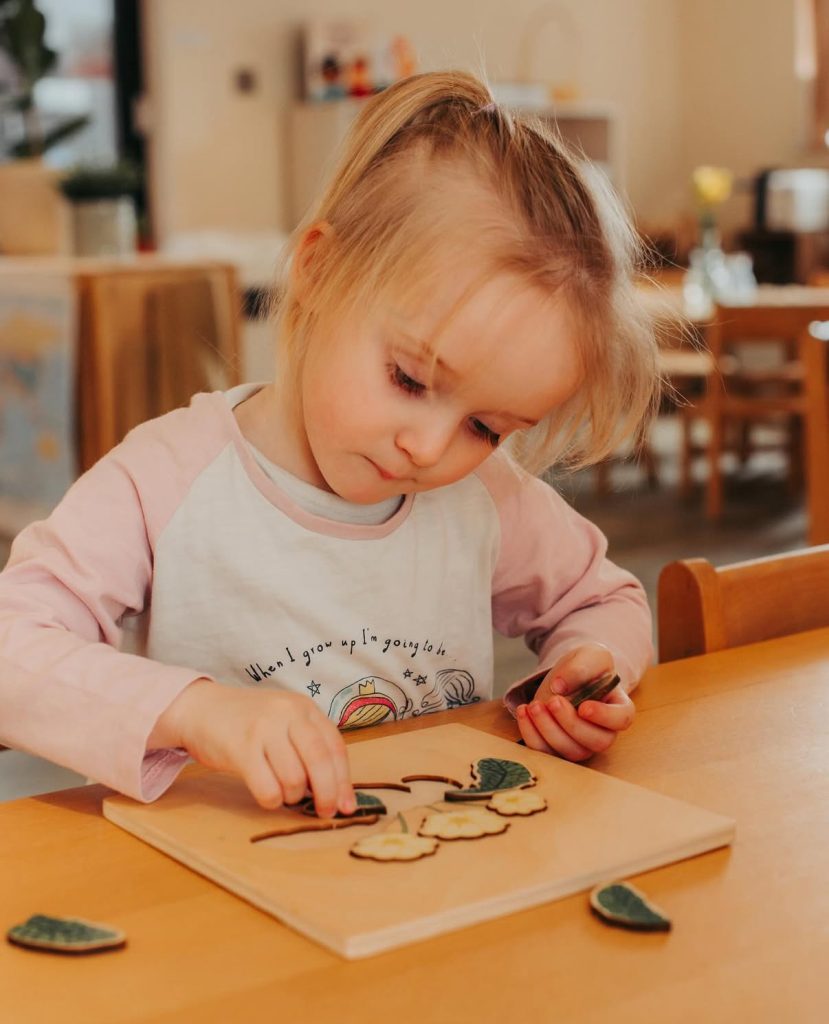
The sensorial area is a key component of the Montessori classroom, intended to refine children’s sensory perceptions of touch, smell, taste, sight and sound. The specialist equipment is designed to help children to organise their environment, classify objects and learn order.
Children learn new things by seeing with their eyes, categorizing them into dimension, colour/chromatic and form.
Language
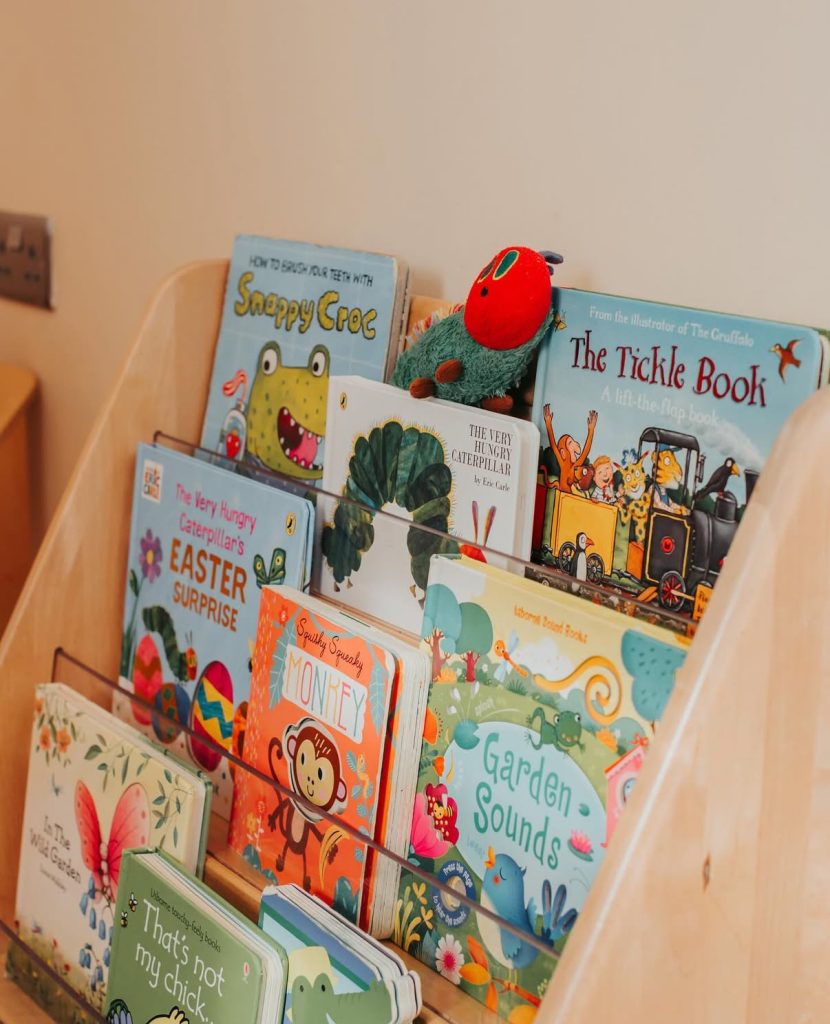
The Montessori approach to literacy integrates the teaching of reading and writing in a way that feels natural and harmonious. It aims to foster a positive relationship with written language from an early age, acknowledging that each child learns at their own pace.
This method helps children to develop a strong foundation in literacy, tailored to their unique needs and abilities. Unlike traditional methods that often emphasise memorisation and repetition, this approach is centred on sensory exploration and self-directed learning.
Mathematics
Montessori mathematics focuses on practical, hands-on learning. It encourages children to discover and understand mathematical ideas by using real objects and engaging in activities.
The specialist equipment transforms learning from counting and sorting to fractions and geometry into an interactive and enjoyable experience. This approach helps young children develop a deep understanding and love for numbers.
Knowledge and Understanding of the World
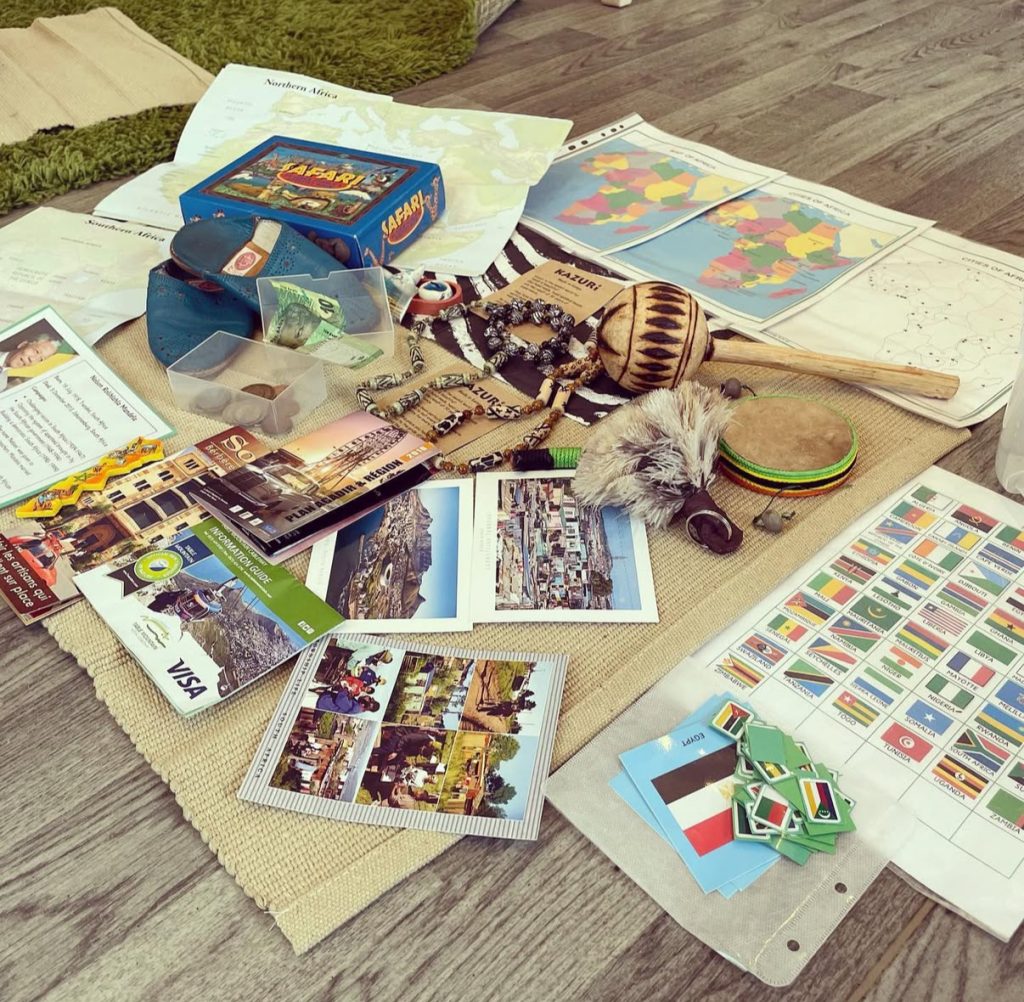
Montessori cultural activities play a crucial role in helping children become well-rounded and culturally aware individuals.
Through these activities, children gain a deeper understanding of the world around them, which helps them develop empathy and appreciation for diversity. The hands-on, child-centred approach of Montessori education allows children to explore and discover at their own pace, making learning both enjoyable and meaningful.
This environment also emphasises the importance of caring for our world, teaching children about sustainability and what it means to be a Citizen of the world.